Bagurumba: Symphony of the Bodo Community Traditional Dance
Bagurumba is not just a dance form but an identity of the Boro community and a rich cultural element of Assam. Let's explore more on bagurumba, its history, and its cultural significance.

Updated on : January 10, 2026
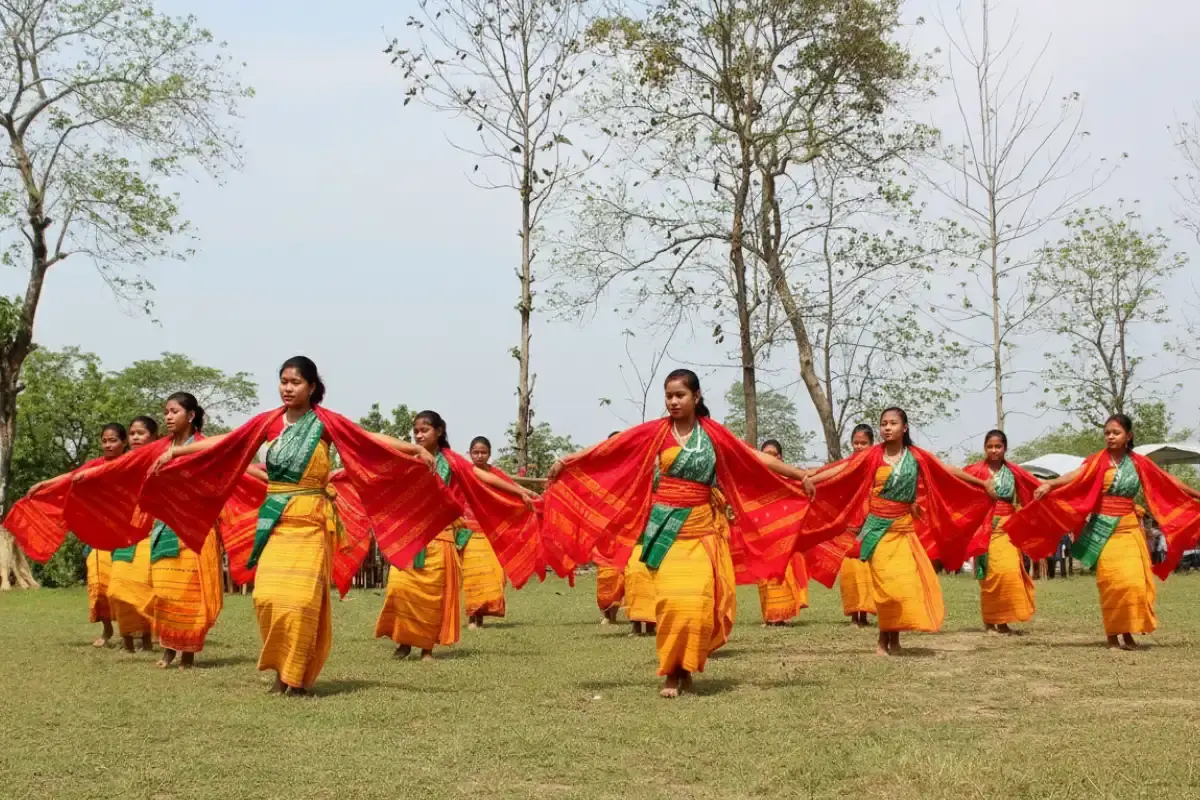
One of the most vibrant expressions of Bodo culture is their traditional dance, the Bagurumba, popularly known as the Butterfly Dance. This name stems from its graceful movements, which resemble the fluttering of butterflies.
Assam, nestled at the junction of ancient Chinese kingdoms, Southeast Asia, and West Asia, has long been a melting pot of cultures due to its strategic position on historic trade routes. This land of eastern astrology has witnessed waves of migration throughout history, shaping its diverse cultural landscape. Among the many communities that have enriched Assam's heritage, the Bodo-Kachari people stand out. Migrating from Tibet around 3000 years ago, the Bodos have preserved their unique culture, cuisine, attire, and Tibeto-Burman language, complete with its own script.
Before delving into the artistic beauty of Bagurumba, let’s explore the Bodo community’s demographic significance. As per the 2011 Census, Bodos are the largest tribal group in Assam, with a population of around 1.41 million. They predominantly inhabit the Bodoland Territorial Region (BTR) and maintain a deep connection with nature, which profoundly influences their cultural traditions.
Origin and History of Bagurumba
Bagurumba traces its roots to the folk tale of Damchika and Braima, gradually evolving into a cultural emblem of the Bodo people. This dance is not merely a performance; it embodies emotion, identity, and ancestral legacy. Bagurumba is an integral part of Baishagu, the Bodo equivalent of Bihu. During Baishagu, people worship cows, seek blessings from elders, and offer prayers to Bathou, the chief deity of the Bodos, symbolized by the Siju plant. Bagurumba is performed as an offering to Bathou, celebrating nature and life.
Vibrant Costumes and Instruments
This dance is not just about movement—it is a fusion of attire, music, and storytelling. Women, the center of attraction in Bagurumba, wear exquisite traditional outfits like Dokhna (a long skirt), Jwmgra (a scarf), and Aronai (similar to a Gamosa).
They dance to the rhythm of traditional instruments, including
Sifung—A long bamboo flute with five holes.
Serja—A violin-like instrument with a curved scroll.
Tharkha—A split bamboo percussion instrument.
Kham—A long drum made of wood and goatskin.
Bodo folk songs—adding melody and rhythm to the dance.
Features of Bagurumba
This dance is characterized by graceful hand and foot movements, symbolizing elements of nature, agricultural activities, and daily life. The synchronization of hand gestures and nimble footwork creates a mesmerizing visual, making it one of Assam’s most elegant folk dances. When performed by large groups, dancers mimic the movements of butterflies, giving the dance its iconic name.
Significance of Bagurumba
Bagurumba represents the Bodo community’s solidarity and plays a major role in Assam’s Bihu celebrations, thereby promoting cultural unity. It also nurtures young talents interested in the cultural arts, promoting careers in traditional dance. The festival provides opportunities for artisans, instrument makers, and weavers to showcase their craftsmanship, leading to economic growth and upliftment. Moreover, Bagurumba captivates tourists, drawing attention to Assam’s cultural richness.
Endnotes
Despite its beauty, Bagurumba faces threats from modernization, globalization, and diminishing interest among younger generations. The rise of fusion music and social media distractions also contribute to its decline. However, the government and the community have taken proactive steps to preserve and promote Bagurumba:
The Assam Chief Minister has proposed setting a Guinness World Record for the largest Bagurumba performance, showcasing it globally. Financial incentives have been introduced for artists practicing Bagurumba. Traditional craft industries related to Bagurumba’s attire and instruments are receiving government support. Bodo families are encouraging their children to embrace and sustain this cultural heritage.
As global leaders emphasize cultural preservation, Assam must safeguard its traditions. Culture is the soul of society—without it, we risk becoming mechanical beings. A holistic approach that blends tradition with modern opportunities can ensure Bagurumba thrives for generations. By doing so, we celebrate Assam’s diversity while fostering unity, ultimately achieving cultural sustainability and recognition on the world stage.